INTRODUCTION

Many people wonder why they look the way they do. Some notice that they look different from their parents or close relatives, while others appear to resemble distant family members such as grandparents, great-grandparents, or uncles. In some cases, individuals seem to possess traits that have not been observed in their immediate family lineage. These observations often lead to curiosity and, sometimes, confusion.
Due to limited or inappropriate exposure to scientific knowledge, some people attribute physical appearance to spirituality, chance, or vague ideas of relativity, without understanding the biological mechanisms involved. However, human physical traits are largely explained by genetics and environmental influences.
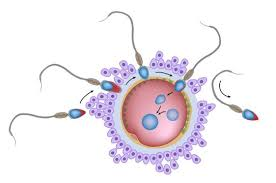
For reproduction to occur in humans, the male gamete (sperm), produced in the testes and released through the penis, must meet the female gamete (egg), which is released during ovulation. These gametes are haploid, meaning they each contain one set of chromosomes. Chromosomes are structures that house DNA (deoxyribonucleic acid), the biological material responsible for carrying genetic information.
When fertilization occurs, the sperm and egg fuse to form a diploid cell known as a zygote, which contains two sets of chromosomes, one from each parent. Although millions of sperm cells are released, only one successfully fertilizes the egg. If more than one sperm enters the egg, a condition called polyspermy occurs. Polyspermy is usually lethal because the excess centrosomes disrupt normal cell division and impair zygote development.
It is also important to note that fertilization determines whether the offspring will be male or female. To understand how this occurs, we must examine human chromosomes, particularly the sex chromosomes.
HUMAN CHROMOSOMES
The human genome consists of 23 pairs of chromosomes, each composed of a long DNA molecule containing millions of base pairs. These base pairs encode genes, which provide instructions for building proteins and determining traits such as physical appearance, susceptibility to certain diseases, and other biological characteristics.
Chromosome pairs 1 through 22 are known as autosomes, while the 23rd pair consists of the sex chromosomes, which determine an individual’s biological sex.
Humans possess two types of sex chromosomes: X and Y. Females have two X chromosomes (XX), while males have one X chromosome and one Y chromosome (XY). The X chromosome is often referred to as the “default” chromosome, whereas the Y chromosome contains genes responsible for male development. One such gene is the SRY (Sex-determining Region Y) gene, which initiates the formation of male reproductive organs.
Beyond sex determination, the X and Y chromosomes also carry genes that influence traits such as height, eye color, and other physical features. They are also involved in certain genetic conditions, including color blindness and Turner syndrome.
DOMINANT AND RECESSIVE GENES
In human genetics, genes occur in pairs and may exist in different forms known as alleles. Alleles can be either dominant or recessive. Dominant alleles are typically represented by uppercase letters, while recessive alleles are represented by lowercase letters.
A dominant allele is expressed whenever it is present, even if only one copy exists. For example, if brown eye color is dominant over blue eye color, an individual with one brown allele and one blue allele (a heterozygous condition) will have brown eyes. In contrast, a recessive allele is only expressed when both copies are present (a homozygous recessive condition).
After birth, individuals exhibit various traits. Traits that are controlled almost entirely by genes are called qualitative traits, while those influenced by both genes and the environment are known as quantitative traits. Qualitative traits are usually controlled by one or a few genes and show little environmental influence; examples include sex and albinism. Quantitative traits, such as height and body size, are controlled by many genes and are strongly influenced by environmental factors.